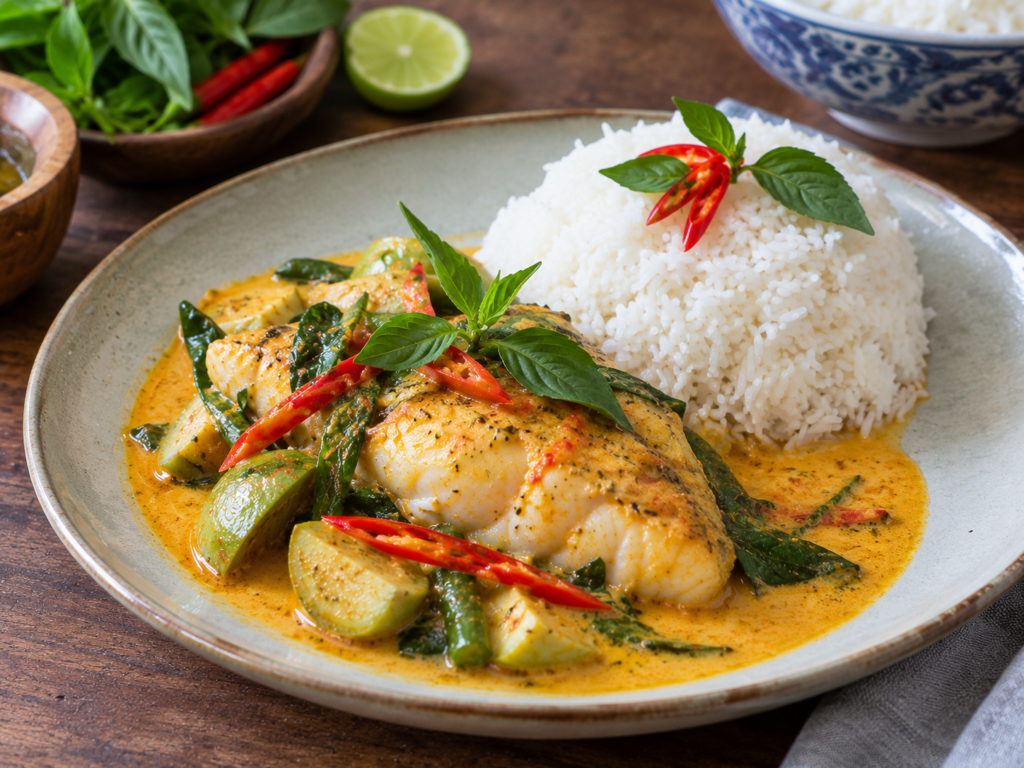
![Description: Thai coconut curry fish with tender fish, creamy coconut milk gravey with thai spices, aromatic flavor ,serve with jasmine rice.]() Table of Contents
Table of Contents
- Introduction
- What Is Thai Coconut Curry Fish?
- Why You’ll Love This Thai Coconut Curry Fish
- Ingredients You’ll Need
- How to Make Thai Coconut Curry Fish
- What to Serve with Thai Coconut Curry Fish
- Tips for Making the Best Thai Coconut Curry Fish
- Variations and Substitutions
- How to Store and Reheat Thai Coconut Curry Fish
- Frequently Asked Questions
- Final Thoughts
- Thai Coconut Curry Fish Recipe Card
Introduction
Thai Coconut Curry Fish is a deliciously creamy and flavorful dish that brings together tender fish, rich coconut milk, aromatic Thai spices, and a hint of lime. This easy Thai coconut curry fish recipe is perfect when you want a comforting meal that feels special but doesn’t require hours in the kitchen.
The combination of creamy coconut milk and fragrant Thai curry paste creates a rich sauce that perfectly complements mild, flaky fish. Fresh garlic, ginger, herbs, and lime add brightness and balance, while a touch of chili brings just the right amount of heat. Best of all, this Thai fish curry can be prepared in about 30 minutes, making it an excellent choice for a quick weeknight dinner.
Serve it with steamed jasmine rice to soak up every bit of the creamy coconut curry sauce, and you’ll have a satisfying meal that’s simple, aromatic, and packed with Thai-inspired flavor.
What Is Thai Coconut Curry Fish?
Thai Coconut Curry Fish is a flavorful Thai-inspired dish made with tender fish simmered in a rich, creamy coconut curry sauce. The sauce typically combines coconut milk with Thai curry paste, garlic, ginger, lime juice, and fresh herbs to create a delicious balance of creamy, spicy, savory, and slightly tangy flavors.
This Thai fish curry is usually prepared with mild, firm white fish such as cod, haddock, halibut, or tilapia. The fish gently cooks in the coconut curry sauce, allowing it to absorb the aromatic flavors while remaining moist and tender.
One of the best things about Thai coconut curry fish is its simplicity. It uses easy-to-find ingredients and can be ready in around 30 minutes, making it a great option for a quick weeknight meal. The creamy curry sauce is especially delicious served over steamed jasmine rice, which soaks up all the flavorful sauce.
While recipes can vary, Thai coconut curry fish can easily be customized to suit your taste. You can make it milder by reducing the curry paste, add vegetables such as bell peppers or spinach, or increase the chili for a spicier dish. Whether you’re new to Thai-inspired cooking or already love Thai flavors, this comforting fish curry is an easy and satisfying meal to make at home.
Why You’ll Love This Thai Coconut Curry Fish
There are plenty of reasons to make this Thai Coconut Curry Fish part of your regular dinner rotation. It’s creamy, flavorful, quick to prepare, and easy to customize with your favorite ingredients.
- Quick and easy to make: This easy Thai fish curry comes together in about 30 minutes, making it perfect for busy weeknights.
- Rich and creamy: Coconut milk creates a smooth, creamy sauce that coats the tender fish beautifully without needing dairy.
- Packed with Thai-inspired flavors: Thai curry paste, garlic, ginger, lime, and fresh herbs create a delicious combination of spicy, savory, tangy, and aromatic flavors.
- Tender, flaky fish: Mild white fish gently simmers in the coconut curry sauce, allowing it to absorb all the delicious flavors while staying moist.
- Easy to customize: Adjust the spice level, add vegetables such as bell peppers or spinach, or choose your favorite type of firm white fish.
- Perfect with rice: Serve the curry over fluffy jasmine rice to soak up the creamy coconut sauce and turn it into a complete and satisfying meal.
- Great for any occasion: Whether you’re looking for a quick family dinner or an impressive meal for guests, this Thai coconut curry fish is simple enough for everyday cooking and flavorful enough for special occasions.
Ingredients You’ll Need
This Thai Coconut Curry Fish recipe makes 4 to 6 servings and uses simple ingredients to create a creamy, aromatic, and flavorful curry.
For the Fish
- 2 lb (900 g) firm white fish fillets, such as cod, haddock, halibut, or tilapia
- 1 teaspoon salt
- ½ teaspoon black pepper
- 1 tablespoon vegetable or coconut oil
For the Thai Coconut Curry Sauce
- 1 tablespoon vegetable or coconut oil
- 1 medium onion, finely sliced
- 4 cloves garlic, minced
- 1 tablespoon fresh ginger, grated
- 3 tablespoons Thai red curry paste
- 2 cans (13.5 oz / 400 ml each) full-fat coconut milk
- 1 tablespoon fish sauce
- 1 tablespoon brown sugar or palm sugar
- 1 tablespoon fresh lime juice, plus more to taste
- ½ cup (120 ml) water or low-sodium fish/vegetable stock
For the Vegetables
- 1 red bell pepper, thinly sliced
- 1 cup (30 g) fresh spinach, optional
- ½ cup fresh Thai basil or cilantro, roughly chopped
For Serving
- 4–6 cups cooked jasmine rice
- Lime wedges
- Fresh cilantro or Thai basil
- Sliced red chili, optional, for extra heat
Ingredient Notes
Fish: Choose a firm, mild white fish that holds its shape during cooking. Fresh or properly thawed frozen fish can both work well.
Coconut milk: Full-fat coconut milk gives the curry its signature creamy texture and rich flavor.
Thai red curry paste: The amount can be adjusted depending on how spicy you like your curry. Start with less if you prefer a milder dish.
Lime juice: Add it near the end of cooking to give the creamy coconut sauce a fresh, bright flavor.
How to Make Thai Coconut Curry Fish
Making Thai Coconut Curry Fish at home is easier than you might think. The key is to build a flavorful coconut curry sauce first, then gently simmer the fish until it is tender and flaky.
Step 1: Prepare the Fish
Pat the fish fillets dry with paper towels. Season both sides with salt and black pepper. If the fillets are very large, cut them into smaller portions so they cook evenly.
Step 2: Sauté the Aromatics
Heat 1 tablespoon of oil in a large, deep skillet or pan over medium heat. Add the sliced onion and cook for 2–3 minutes, until it begins to soften.
Add the minced garlic and grated ginger. Cook for another 30–60 seconds, stirring frequently, until fragrant.
Step 3: Add the Thai Curry Paste
Stir in the Thai red curry paste and cook for about 1 minute. Cooking the curry paste briefly helps release its aromatic flavors and gives the sauce a deeper taste.
Step 4: Make the Coconut Curry Sauce
Pour in the coconut milk and water or stock. Stir well to combine the curry paste with the coconut milk.
Add the fish sauce and brown sugar. Bring the sauce to a gentle simmer and cook for about 3–5 minutes, allowing the flavors to come together.
Step 5: Add the Vegetables
Add the sliced red bell pepper to the simmering curry sauce. Cook for about 2–3 minutes, or until slightly tender while still retaining some texture.
If using spinach, stir it in toward the end of cooking so it gently wilts into the sauce.
Step 6: Add the Fish
Carefully place the seasoned fish fillets into the coconut curry sauce. Spoon some of the sauce over the top of the fish.
Cover the pan and gently simmer for approximately 6–10 minutes, depending on the thickness of the fish. Avoid boiling the sauce too vigorously, as this can cause the fish to break apart.
The fish is ready when it becomes opaque and flakes easily with a fork.
Step 7: Finish the Curry
Turn off the heat and gently stir in the fresh lime juice. Taste the sauce and adjust the seasoning if needed. Add more lime juice for freshness, fish sauce for saltiness, or curry paste for additional heat.
Finish with fresh Thai basil or cilantro and sliced red chili if desired.
Step 8: Serve
Serve the Thai Coconut Curry Fish immediately over steamed jasmine rice. Spoon plenty of the creamy coconut curry sauce over the fish and rice.
Garnish with fresh herbs and lime wedges for an extra burst of flavor.
Cooking Tips for Perfect Thai Coconut Curry Fish
- Don’t overcook the fish: Remove it from the heat as soon as it becomes opaque and flakes easily.
- Simmer gently: A gentle simmer helps keep the fish tender and prevents it from breaking apart.
- Use full-fat coconut milk: It creates a richer and creamier curry sauce.
- Add lime juice at the end: This keeps the citrus flavor fresh and bright.
- Adjust the spice level: Use more or less Thai red curry paste depending on your preference.
- Don’t stir the fish too much: Once the fish is added, gently spoon sauce over it instead of stirring frequently.
What to Serve with Thai Coconut Curry Fish
Thai Coconut Curry Fish is rich, creamy, and full of aromatic flavors, so it pairs beautifully with simple sides that can soak up the delicious coconut curry sauce. Here are some of the best options to serve alongside this Thai fish curry.
1. Jasmine Rice
Steamed jasmine rice is the classic choice for Thai coconut curry fish. Its light, fragrant flavor complements the rich coconut sauce without overpowering the fish. Spoon the curry and plenty of sauce over the warm rice for a satisfying meal.
2. Coconut Rice
For an extra creamy and tropical combination, serve the curry with coconut rice. The subtle sweetness of coconut rice works especially well with the spicy and savory flavors of the Thai curry.
3. Rice Noodles
Soft rice noodles are another excellent option. They absorb the coconut curry sauce and make the dish feel similar to a comforting Thai noodle bowl.
4. Steamed Vegetables
Keep the meal light by serving Thai coconut curry fish with steamed broccoli, green beans, bok choy, or carrots. The fresh vegetables add color, texture, and balance to the creamy sauce.
5. Thai Cucumber Salad
A fresh cucumber salad makes a refreshing side for this rich fish curry. Crisp cucumber, herbs, lime, and a lightly tangy dressing provide a bright contrast to the creamy coconut milk sauce.
6. Roti or Flatbread
Warm roti, naan, or another soft flatbread can be used to scoop up the coconut curry sauce. It’s a simple and delicious alternative to rice.
7. Fresh Herbs and Lime
Don’t forget the garnishes. Fresh cilantro, Thai basil, sliced red chili, and lime wedges add freshness and a burst of flavor just before serving.
Best Pairing
For the simplest and most traditional-style meal, serve Thai Coconut Curry Fish with steamed jasmine rice, fresh cilantro, and lime wedges. The fluffy rice absorbs the creamy coconut curry sauce while the lime and herbs add freshness to every bite.
Tips for Making the Best Thai Coconut Curry Fish
A few simple techniques can make a big difference when preparing Thai Coconut Curry Fish. Follow these tips for tender fish, a creamy sauce, and well-balanced Thai-inspired flavors every time.
1. Choose the Right Fish
Use a firm, mild white fish such as cod, haddock, halibut, sea bass, or tilapia. These varieties hold their shape well and absorb the flavors of the coconut curry sauce.
2. Pat the Fish Dry
Before seasoning, pat the fish fillets dry with paper towels. Removing excess moisture helps the seasoning stick and prevents the fish from becoming watery while cooking.
3. Don’t Skip the Aromatics
Fresh garlic, ginger, and onion provide an important flavor base for the curry. Sauté them until fragrant before adding the Thai curry paste to develop a deeper, more aromatic sauce.
4. Cook the Curry Paste First
Briefly sauté the Thai red curry paste in oil before adding the coconut milk. This helps release its oils and spices, resulting in a more flavorful Thai coconut curry.
5. Use Full-Fat Coconut Milk
Full-fat coconut milk gives the curry a rich, smooth, and creamy texture. Shake the can well before opening and stir it thoroughly into the sauce.
6. Keep the Heat Gentle
Once the fish is added, maintain a gentle simmer rather than a rapid boil. Cooking the fish gently helps keep it moist and tender while reducing the chance of the fillets breaking apart.
7. Avoid Overcooking the Fish
Fish cooks quickly, so keep a close eye on it. The fillets are ready when they become opaque and flake easily with a fork. Thicker pieces may need a few extra minutes.
8. Balance the Flavors
Thai cooking is all about balance. Taste the sauce before serving and adjust it with lime juice for acidity, fish sauce for saltiness, sugar for sweetness, or curry paste for more heat.
9. Add Lime Juice at the End
Fresh lime juice is best added after cooking. Its bright, tangy flavor helps cut through the richness of the coconut milk and makes the curry taste fresher.
10. Finish with Fresh Herbs
Garnish the finished Thai Coconut Curry Fish with fresh cilantro or Thai basil and sliced red chili. Fresh herbs add color, aroma, and a final layer of flavor.
11. Serve Immediately
Thai coconut curry fish tastes best when served hot and fresh. Pair it with steamed jasmine rice so the rice can absorb the creamy coconut curry sauce.
Variations and Substitutions
One of the best things about Thai Coconut Curry Fish is how easy it is to customize. You can change the type of fish, adjust the spice level, add vegetables, or make simple ingredient substitutions while keeping the creamy coconut curry base.
1. Try Different Types of Fish
You don’t have to use only one type of fish. Cod, haddock, halibut, sea bass, tilapia, and other firm white fish work well in this recipe. Choose a mild fish that can hold its shape while simmering in the curry sauce.
2. Make It with Shrimp
For a seafood variation, replace the fish with peeled and deveined shrimp. Shrimp cook quickly, so add them toward the end of cooking and simmer just until they turn pink and opaque.
3. Add More Vegetables
Make your Thai coconut curry fish more colorful and nutritious by adding vegetables. Bell peppers, spinach, broccoli, zucchini, mushrooms, snap peas, and baby corn are all excellent choices.
4. Adjust the Spice Level
For a mild curry, use less Thai red curry paste and omit the fresh chili. If you enjoy spicy food, add extra curry paste, sliced fresh chili, or a pinch of chili flakes.
5. Use Green Curry Paste
For a different flavor, substitute Thai green curry paste for red curry paste. Green curry usually has a fresher, more herbal flavor and can give the dish a different level of heat.
6. Make It Dairy-Free
This recipe is naturally dairy-free when your curry paste and other packaged ingredients are dairy-free. Coconut milk provides all the creaminess without the need for heavy cream or butter.
7. Substitute the Fish Sauce
If you don’t have fish sauce or prefer not to use it, substitute it with soy sauce or tamari. Keep in mind that the flavor will be slightly different, but the curry will still be delicious.
8. Make It Vegetarian
For a vegetarian version, replace the fish with tofu and use soy sauce or another vegetarian-friendly seasoning instead of fish sauce. Add extra vegetables for a hearty coconut curry.
9. Make the Sauce Richer
If you prefer an especially rich and creamy curry, use full-fat coconut milk and allow the sauce to simmer gently for a few extra minutes before adding the fish.
10. Add a Touch of Sweetness
A small amount of brown sugar or palm sugar balances the heat and acidity of the curry. You can adjust the amount according to your taste, especially if you’re using a particularly spicy curry paste.
Easy Substitution Guide
| Ingredient | Possible Substitute |
| Cod or white fish | Haddock, halibut, tilapia, sea bass |
| Thai red curry paste | Thai green curry paste |
| Fish sauce | Soy sauce or tamari |
| Brown sugar | Palm sugar or regular sugar |
| Spinach | Bok choy or kale |
| Bell pepper | Zucchini or snap peas |
| Jasmine rice | Rice noodles or coconut rice |
| Fish | Shrimp or firm tofu |
Whether you prefer your curry mild or spicy, packed with vegetables, or made with a different type of seafood, these variations make it easy to adapt Thai Coconut Curry Fish to your taste and the ingredients you have on hand.
How to Store and Reheat Thai Coconut Curry Fish
If you have leftover Thai Coconut Curry Fish, proper storage and gentle reheating will help maintain the creamy texture of the sauce and keep the fish tender.
How to Store
Allow the curry to cool slightly before transferring it to an airtight container. Refrigerate leftovers within 2 hours of cooking.
Store the fish and coconut curry sauce in the refrigerator for up to 3 days. If possible, keep the curry separate from rice so the rice doesn’t absorb too much of the sauce.
How to Reheat
The best way to reheat Thai Coconut Curry Fish is gently on the stovetop. Place the curry in a saucepan and warm it over low to medium-low heat, stirring the sauce occasionally.
Heat until the fish and sauce are thoroughly hot, but avoid bringing the curry to a vigorous boil. High heat can cause the fish to become dry and fall apart.
If the sauce has thickened in the refrigerator, add a small splash of water or coconut milk while reheating to bring it back to a smooth consistency.
Can You Freeze Thai Coconut Curry Fish?
You can freeze the curry, although the texture of the fish and coconut sauce may change slightly after thawing. For the best quality, freeze the curry in an airtight, freezer-safe container for up to 2 months.
Thaw it overnight in the refrigerator and reheat gently on the stovetop. Avoid repeatedly reheating and cooling the curry.
Leftover Tip
Leftover Thai coconut curry sauce can be delicious served with freshly cooked rice or noodles. Add a squeeze of fresh lime and a few chopped herbs after reheating to refresh the flavors.
If you like our thai coconut curry fish ,you must try our more fish recipehttps://recipebloomkitchen.com/moroccan-chermoula-fish-recipe/
Frequently Asked Questions
Q: Can I use any type of fish for Thai Coconut Curry Fish?
A: Firm, mild white fish works best because it holds its shape while cooking. Cod, haddock, halibut, tilapia, and sea bass are all good choices. Avoid very delicate fish that may break apart easily in the curry sauce.
Q: What is the best coconut milk for Thai fish curry?
A: Full-fat canned coconut milk is the best choice for a rich and creamy Thai fish curry. It creates a smooth sauce and provides a fuller coconut flavor than light coconut milk.
Q: How spicy is Thai Coconut Curry Fish?
A: The spice level depends mainly on the amount and type of Thai curry paste you use. For a mild curry, reduce the curry paste and skip the fresh chili. For more heat, add extra curry paste or sliced fresh chili.
Q: Can I make Thai Coconut Curry Fish without fish sauce?
A: Yes. You can substitute fish sauce with soy sauce or tamari. The flavor will be slightly different, but these alternatives still provide savory depth to the coconut curry sauce.
Q: Can I add vegetables to Thai Coconut Curry Fish?
A: Absolutely. Bell peppers, spinach, zucchini, broccoli, mushrooms, snap peas, and baby corn are excellent additions. Add vegetables according to how long they need to cook so they remain tender but not mushy.
Q: Can I make this Thai fish curry ahead of time?
A: You can prepare the curry sauce ahead of time and refrigerate it. For the best texture, add and cook the fish shortly before serving. This helps prevent the fish from becoming overcooked.
Final Thoughts
Thai Coconut Curry Fish is a simple yet incredibly flavorful meal that’s perfect for both busy weeknights and relaxed weekend dinners. Tender fish simmered in a creamy coconut curry sauce, combined with fragrant garlic, ginger, Thai curry paste, and fresh lime, creates a delicious balance of rich, spicy, savory, and refreshing flavors.
The recipe is also easy to customize with different types of fish, vegetables, and spice levels, making it a versatile dish you can adapt to your taste. Serve it with fluffy jasmine rice and fresh herbs to soak up every bit of the flavorful coconut sauce.
If you’re looking for an easy Thai fish curry that’s comforting, quick to prepare, and packed with flavor, this Thai Coconut Curry Fish is a recipe worth adding to your dinner rotation.
Thai Coconut Curry Fish
Creamy, flavorful, and easy Thai Coconut Curry Fish made with tender white fish, coconut milk, Thai red curry paste, fresh ginger, garlic, and lime. Serve with jasmine rice for a delicious 30-minute dinner.
⭐ Recipe Details
Prep Time: 10 minutes
Cook Time: 20 minutes
Total Time: 30 minutes
Servings: 4–6
Cuisine: Thai-inspired
Category: Dinner
Calories: Approximately 400–500 per serving, depending on the fish and serving size
Ingredients
For the Fish
- 2 lb (900 g) firm white fish fillets, such as cod, haddock, halibut, or tilapia
- 1 teaspoon salt
- ½ teaspoon black pepper
- 1 tablespoon vegetable or coconut oil
For the Coconut Curry Sauce
- 1 tablespoon vegetable or coconut oil
- 1 medium onion, thinly sliced
- 4 cloves garlic, minced
- 1 tablespoon fresh ginger, grated
- 3 tablespoons Thai red curry paste
- 2 cans (13.5 oz / 400 ml each) full-fat coconut milk
- ½ cup (120 ml) water or low-sodium fish/vegetable stock
- 1 tablespoon fish sauce
- 1 tablespoon brown sugar or palm sugar
- 1 tablespoon fresh lime juice, plus more to taste
Vegetables & Garnish
- 1 red bell pepper, thinly sliced
- 1 cup (30 g) fresh spinach, optional
- ½ cup fresh cilantro or Thai basil, chopped
- Sliced red chili, optional
- Lime wedges, for serving
For Serving
- 4–6 cups cooked jasmine rice
Instructions
1. Season the fish:
Pat the fish fillets dry with paper towels. Season both sides with salt and black pepper.
2. Sauté the aromatics:
Heat 1 tablespoon of oil in a large skillet or deep pan over medium heat. Add the onion and cook for 2–3 minutes until softened. Add the garlic and ginger and cook for another 30–60 seconds.
3. Cook the curry paste:
Add the Thai red curry paste and stir for about 1 minute until fragrant.
4. Make the coconut sauce:
Pour in the coconut milk and water or stock. Add the fish sauce and brown sugar. Stir well and bring the sauce to a gentle simmer. Cook for 3–5 minutes.
5. Add the vegetables:
Add the sliced bell pepper and cook for 2–3 minutes. If using spinach, add it toward the end and allow it to wilt.
6. Cook the fish:
Gently place the seasoned fish into the curry sauce. Spoon some sauce over the fish, cover the pan, and simmer gently for 6–10 minutes, depending on the thickness of the fillets.
7. Finish the curry:
The fish is ready when it is opaque and flakes easily with a fork. Turn off the heat and stir in the fresh lime juice. Taste and adjust the seasoning if needed.
8. Garnish and serve:
Top with fresh cilantro or Thai basil and sliced red chili. Serve immediately with steamed jasmine rice and lime wedges.
Recipe Notes
- Use firm white fish so the fillets hold together while simmering.
- Full-fat coconut milk gives the sauce the richest texture.
- Don’t boil the curry aggressively after adding the fish.
- Add lime juice at the end to keep its fresh, bright flavor.
- Adjust the amount of Thai red curry paste to control the spice level.
- Leftovers can be refrigerated in an airtight container for up to 3 days.
Nutrition Information
Approximate per serving:
Calories: 400–500 kcal
Protein: 30–35 g
Carbohydrates: 15–25 g
Fat: 25–30 g
Nutrition information is an estimate and will vary depending on the type of fish, coconut milk, rice, and portion size.